Find the control.
Body shape, button position and carrying options influence how a rangefinder fits your routine. Compare a side switch with top-button mode selection, and decide whether a magnet belongs in your setup.
 UNITED STATES
OUR STORY / REVASRI
We bring practical optical measurement into the course, the field and everyday investigation.
Discover the story ↓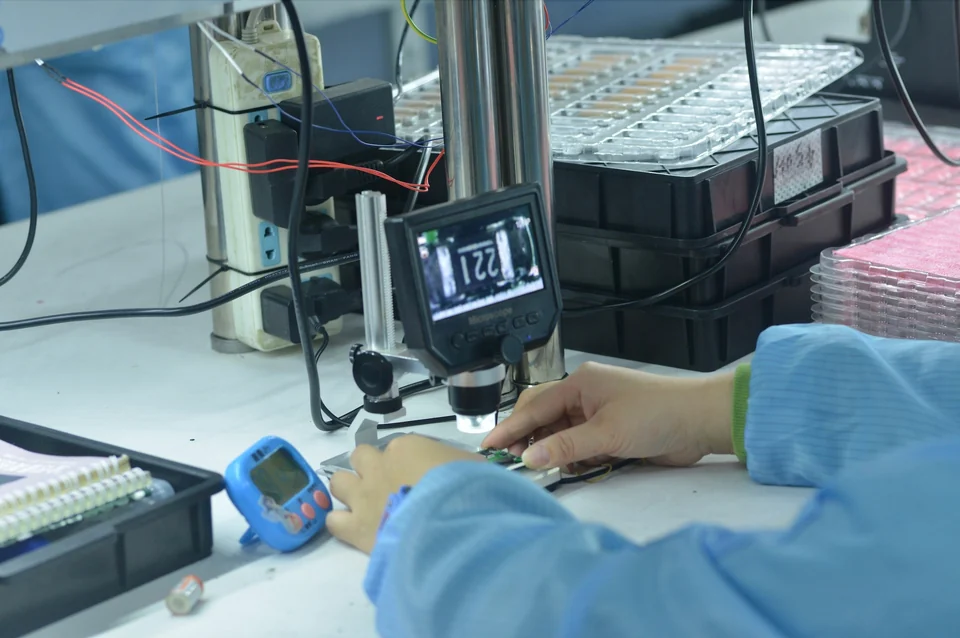
THE IDEA BEHIND THE INSTRUMENT
A rangefinder begins with light, a target and a measurement. Its value appears a moment later, when you can compare that distance with a familiar landmark, a practice note or the next decision on the course. Our collection keeps that practical purpose in view.

FROM GOLF TO A WIDER VIEW
REVASRI’s published journey begins with golf rangefinder development in 2014. The brand later broadened into hunting rangefinders and thermal optical devices, bringing different kinds of measurement into a compact, portable format.
Tianjin Lookout Photoelectric Technology is the manufacturer associated with the rangefinder collection and the registered owner of the REVASRI mark in Canada. Its work includes laser rangefinders and distance-measurement modules.
That background gives our story a clear center: optical measurement, supported by the mechanical and electronic choices that make an instrument useful in the hand.
DESIGN DISCIPLINES
The maker’s design approach brings together the housing, optical path and electronic functions. Each contributes to the experience you have outside.
Body shape, button position and carrying options influence how a rangefinder fits your routine. Compare a side switch with top-button mode selection, and decide whether a magnet belongs in your setup.
Magnification, eyepiece adjustment and lens condition shape the view. A clear target and a readable display make it easier to check that the number belongs to the object you intended.
Direct, horizontal and slope-adjusted distance are different outputs. Useful electronics need equally clear instructions, so the mode you select matches the question you want answered.
PRODUCTION & QUALITY
The manufacturer publishes photographs of instrument workbenches and assembly operations. They show the physical work behind a product that may look simple from the outside: components, housings and optical assemblies brought together.
We keep quality information tied to the model. An environmental rating, a laser class and a conformity document describe particular characteristics; they are not interchangeable promises. Follow the instructions and label supplied with your exact unit.
Explore documentation & care ↗
A COLLECTION WITH DIFFERENT ROLES
Golf and outdoor rangefinders help you read visible distances. Feet-capable models support a consistent language for disc-golf practice. Thermal cameras reveal surface-temperature patterns through compatible devices. Indoor laser meters and Brix instruments address separate measurement tasks.
Our guides help you understand those differences before choosing. They explain what a feature does, where it helps and what it cannot tell you. A useful product decision leaves room for all three.
Explore the REVASRI brand story, manufacturer profile and Canadian trademark record TMA1403993. A trademark registration identifies ownership; it is not a product-quality certificate.