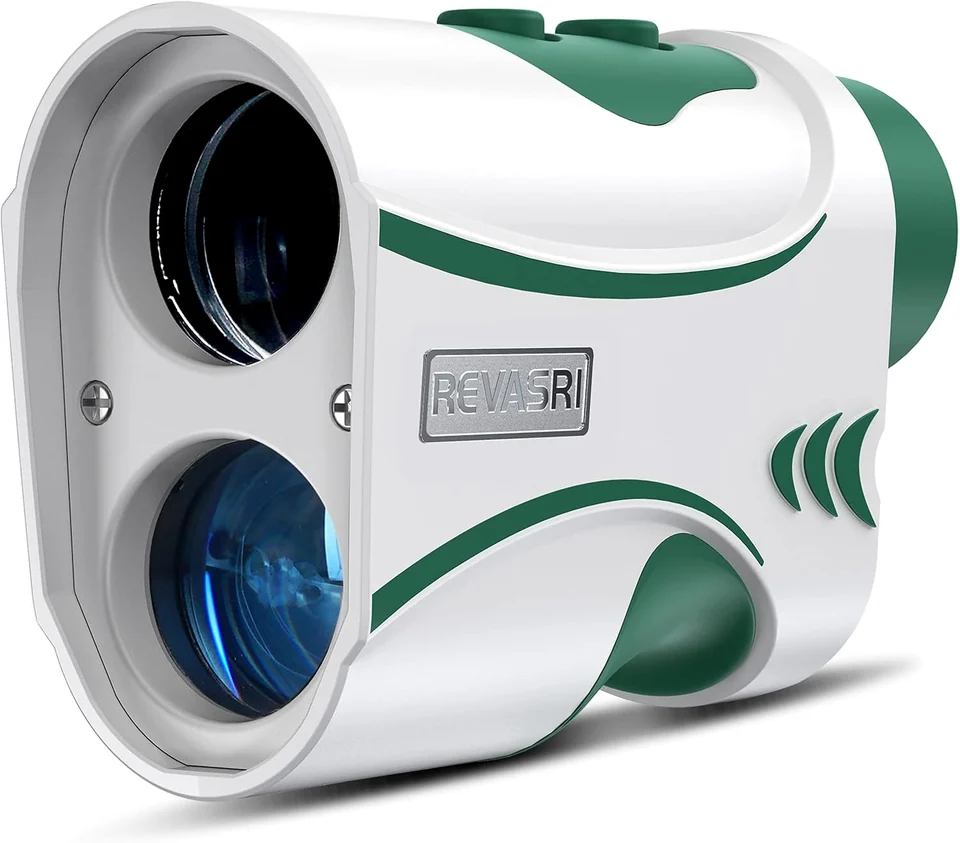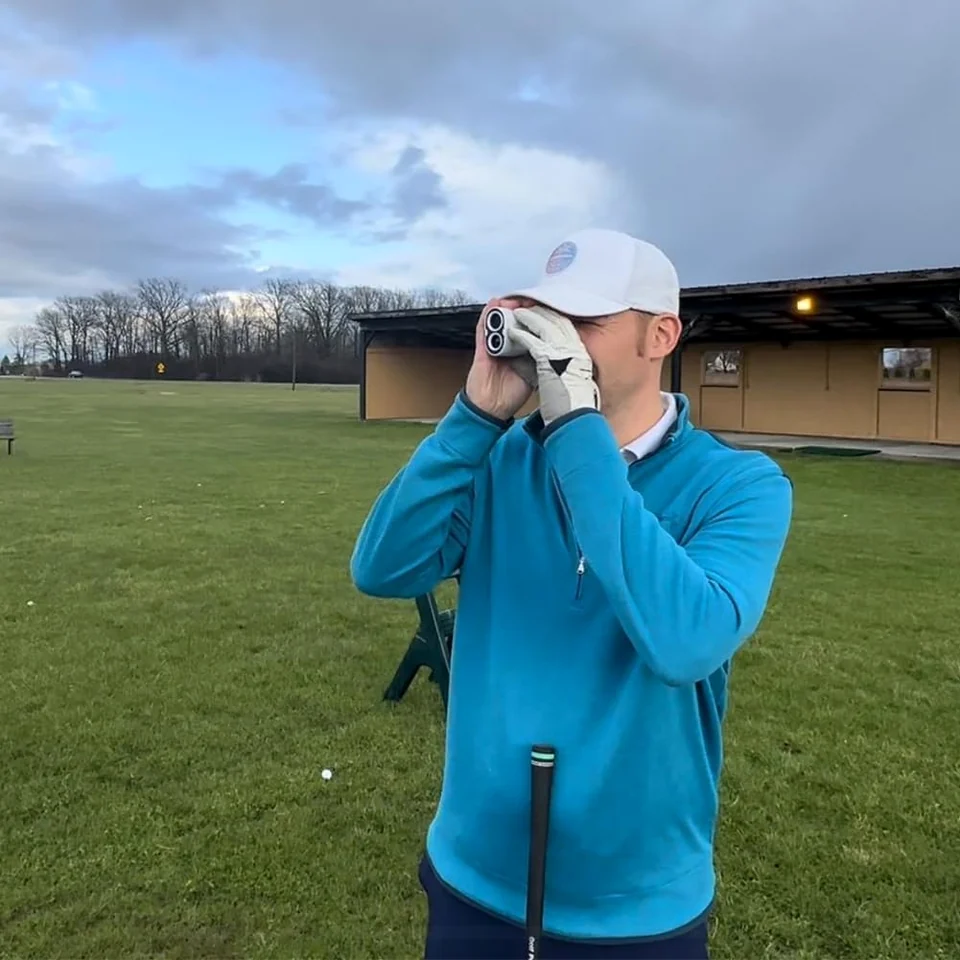
A useful reading begins with the right target, the right unit and the right mode. Here is how we approach those three decisions with our golf rangefinders.
The flag sits in front of a line of trees. You raise the rangefinder, press the button and see a number that looks plausible. A second attempt produces a shorter distance. Before you think about a club, there is a more useful question: which object did each attempt measure?
A laser rangefinder is an information tool. It helps you describe the course, but it cannot know your intended landing area or the shot you feel comfortable playing. The best routine is therefore simple and deliberate: identify the target, confirm the display, then connect the number to your own judgment. Our REVASRI golf collection offers several ways to build that routine.
Start by reading the whole display
It is tempting to look only at the largest digits. Make the unit part of the same glance. A reading in meters and a carry note in yards are not directly comparable. Check the unit when you first set up the device, after lending it to someone else and whenever an otherwise reasonable number seems consistently different from the course markers.
Next, identify the mode. A direct-distance reading describes the line between the instrument and the target. A golf slope-adjusted figure is a calculated playing-distance aid that takes elevation into account. Those are different kinds of information. Neither is a promise that a particular club will carry to a particular spot.
| Display item | Useful meaning | Keep separate |
|---|---|---|
| Direct distance | Distance along the viewing line | Your intended landing result |
| Slope-adjusted distance | A model’s golf playing-distance estimate | Permission to use that feature in an event |
| Flag-lock feedback | A signal that the device acquired a target | Confirmation that every attempt found your intended flag |
Spend a few minutes learning the symbols while stationary. Focus the eyepiece until the display is comfortable to read. Use a clearly visible object and repeat the measurement. The aim is familiarity with the controls, rather than an ambitious test of maximum distance on the first outing.
Confirm the target before choosing the club
A small flag and a large background tree can both return a distance. Their sizes, positions and contrast are different, so the way you move the rangefinder matters. On the NK-1000, the published operating guidance describes holding the measurement button to scan and moving the view from the background toward the flag. Flag recognition triggers vibration and holds the measurement.
Keep the movement controlled. If the displayed number looks like the trees behind the green, repeat the attempt rather than accepting it because the device vibrated. Compare the result with what you can see: the general shape of the hole, a familiar distance marker or a clearly separated nearby landmark. A consistent reading that matches the scene is more useful than an isolated number.
Do not confuse a maximum ranging specification with a guaranteed flag-lock distance. A large, reflective object is a different target from a thin flagstick against a busy background. Weather, target size and reflectivity affect the measurement. A four-digit maximum is not a reason to skip the closer, practical checks you will use during most rounds.
For a new user, this is a worthwhile practice exercise: choose two distinct stationary objects at different distances, measure each several times, then move between them in scan mode. You are learning how the display responds. Keep the exercise on a clear practice area and avoid pointing any optical instrument toward the sun.
Use slope as a specific kind of information
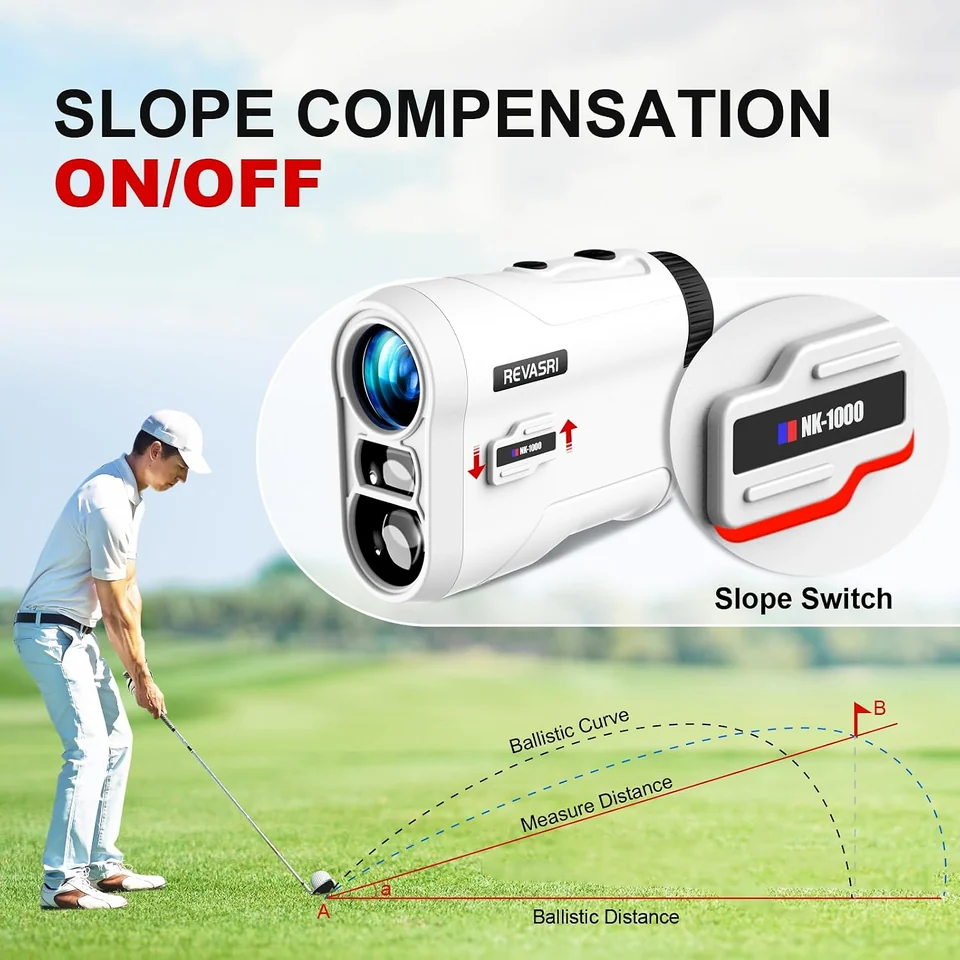
An uphill or downhill target introduces a difference between direct distance and the way a golf shot must be planned. Slope assistance offers a calculated playing-distance estimate. It does not replace your knowledge of carry distance, wind, lie, trajectory or the amount of room beyond the flag.
For illustration, imagine that the direct distance and adjusted figure differ. The useful lesson is not to memorize that difference as a universal conversion. It is to recognize which number is direct and which comes from the model’s calculation. The same horizontal distance with a different height change presents a different situation.
During permitted practice, compare the display modes on familiar terrain. Notice when the slope indication appears and disappears, and how the controls communicate that change. On the N1 and NK-1000, an external switch provides a physical way to select the relevant setting. The 3M02 uses a top mode button. Choose the control approach you find easiest to check.
Make the event rules part of the setup
The Rules of Golf distinguish distance information from prohibited assistance. Under Rule 4.3, obtaining distance information is generally allowed, while measuring elevation changes or using interpreted distance information for recommendations is restricted during the round. A committee can also prohibit distance-measuring devices through a Local Rule.
“Getting information on distance or direction”The R&A, Rule 4.3a(1), allowed uses. Read the rule.
An external slope switch therefore gives you a way to disable a feature; it does not create permission at every competition. Read the event conditions before play. When distance devices are permitted, turn off prohibited assistance and confirm the display reflects the intended mode. If the wording is unclear, ask the committee before relying on the device.
We avoid treating “tournament legal” as a blanket description of an entire round. The device, its active functions and the local conditions all matter. The USGA’s explanation of distance-measuring devices is a useful starting point, followed by the conditions of the specific event.
Measure the places that shape your decision
The flag is not always the only useful target. A visible bunker edge, a tree beside a lay-up area or another clearly identified landmark may help you understand the space you have. Be precise about the question: are you measuring the near edge, the far edge or a separate object beyond it?
A rangefinder measures toward what you aim at. It does not map an entire landing area or tell you what is hidden behind a crest. Treat a distance to a visible object as one part of the picture. If the ground shape or target is ambiguous, avoid turning the reading into a more complete answer than it can provide.
Keep the routine brief enough to fit naturally into play. Have the device accessible, make the measurement when it is appropriate and put it away securely. A magnetic model can be convenient on a cart, but checking that it is still with you before leaving the cart is part of that convenience. The supplied pouch remains useful for transport and storage.
Choose the features you will actually check
Start with units, controls and carrying preference. The N1 supports yards, feet and meters, which is useful if you also play disc golf. The NK-1000 White focuses on a straightforward golf setup with yards and meters, an external slope switch and vibration feedback. The 3M02 brings a magnetic mount and top-button mode selection in a gray-and-red housing.
Power is another practical difference to compare across brands. Our selected golf models use rechargeable batteries, while some other rangefinders use replaceable cells. Think about the routine you can maintain: charging before a trip, keeping the port dry and avoiding a last-minute search for the correct cable.
Magnification and stated accuracy deserve attention, but a specification is not a field guarantee. Compare the exact selected model, then look at its photographs and instructions. Small details such as a switch position or the shape of the grip are often easier to judge from multiple views than from a short feature list.
A short troubleshooting sequence
| What you notice | First check | Next step |
|---|---|---|
| Unexpectedly long reading | Background object instead of flag | Rescan deliberately and compare repeat readings |
| Numbers consistently seem different | Yards versus meters | Match the display to your course and carry notes |
| Adjusted distance remains visible | Slope control and active mode | Follow the exact model manual before competition |
| Unclear view | Eyepiece focus and lens condition | Adjust focus and clean with suitable optical care |
If a reading remains implausible, stop and consult the instructions rather than improvising calibration steps. Controls vary between models. Our manual directory and care page is the place to start; keep your exact model designation and purchase information available if you need further assistance.
Before storing the rangefinder, remove loose grit gently, keep the lenses protected and let damp surfaces dry. Do not treat a splash-resistance description as permission to immerse the device. Keep charging contacts dry and follow the supplied charging instructions.
A good distance routine should become easy to repeat: unit, mode, target, reading. Explore the golf rangefinder collection with those four checks in mind. If you also practice with discs, our disc-golf distance guide explains why feet, elevation and a player’s own field notes deserve a separate approach.